
Fund administrators
Every fund you administer needs a position of its own
You are appointed to perform these funds’ AML obligations, and their business risk assessments land with you. GapSure runs once per fund: each fund against its own approved company profile and its own business risk assessment. So what you hold for fund 73 is not a copy of what you hold for fund 74.
Where this gets hard
Across a portfolio the work is not harder than it is for one fund. It is the same work, many times over, and it has to come out different each time.
Funds outsource their business risk assessment to their administrator. You are appointed to perform the obligations, so the assessment is yours to produce and yours to stand behind, at every fund you administer.
At a single fund, tailoring the assessment is a piece of senior work. Across a portfolio, the only manual route that fits is one document with the names changed, and a document like that is worth less at every fund it covers.
Same jurisdiction, same structure, same service set, and still different: different investors, different asset classes, different delegates, different appointed parties. The differences are the part that has to be written down.
Not how the portfolio is handled. What this fund does, what risk it carries, and what you concluded about it.
What a per-fund position rests on
Each fund gets its own run. The three things that make a run specific to one fund are things you already hold.
The standing is already yours
Someone has to approve each fund’s company profile: the record of what that fund does, which is what relevance is read against. Your appointment is what gives you the standing to do it: you are appointed to perform that fund’s AML obligations, down to appointing its MLCO and MLRO. The per-fund profile is not extra work we invented. It is the written form of what you already carry.
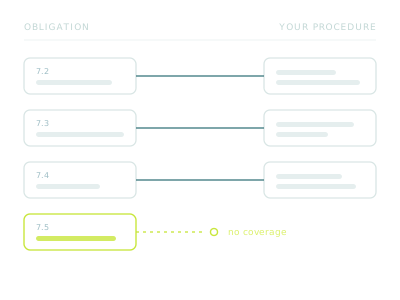
Relevance is read for the fund, not the portfolio
The company profile that fund approves says what it does. Its business risk assessment says what risk it carries. The national risk assessment says what the jurisdiction says about that risk. All three feed what GapSure puts in front of you for that fund, and what it sets aside as not relevant to it.
“Not relevant” is a result you can show
On one organisation’s run, 708 of 3,367 obligations were set aside as not applicable. The model read each one against the company profile that organisation had approved, and judged it not relevant to what they do. None of the 708 failed, and none was checked against the policies. At one fund that is a convenience. Across a portfolio of near-identical funds it is the difference between a position per fund and many copies of one document.
One fund at a time, by design
Each fund sits in GapSure as its own organisation, with its own company profile and its own policy set, and you move between them. There is no single screen that shows the portfolio at once. That is the point: what you can put in front of an examiner is a position for that fund, not an aggregate.
The record is per fund
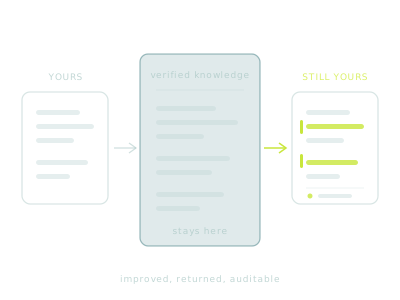
Every gap, every systems-generated improvement and every decision your team took is recorded for that fund: the reasoning on each row of its mapping report, and who changed and accepted what in its activity record.

Start with one fund
Pick one fund you administer. Its policy set goes in, with that fund’s company profile and its business risk assessment. You read what comes back for that fund: the gaps, the improvements, and what was set aside as not relevant to it. Then the next fund: the same work, a different answer.
- ✓ Gaps found against verified knowledge
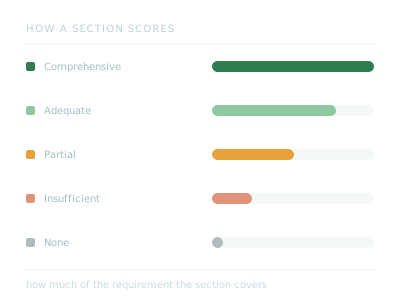
- ✓ Coverage scored: Comprehensive to None
- ✓ Systems-generated procedure improvements
- ✓ Stronger procedures, reviewed & accepted
- ✓ Its mapping report and its activity record
- ✓ The company profile each fund approves
- ✓ The decision on every improvement
- ✓ The procedures themselves, yours to keep
- ✓ Responsibility for the obligations. Govix supports the work; your firm and the fund remain responsible
Find gaps. Close them. Prove it.
See what GapSure returns for one fund before you decide anything about the rest.